
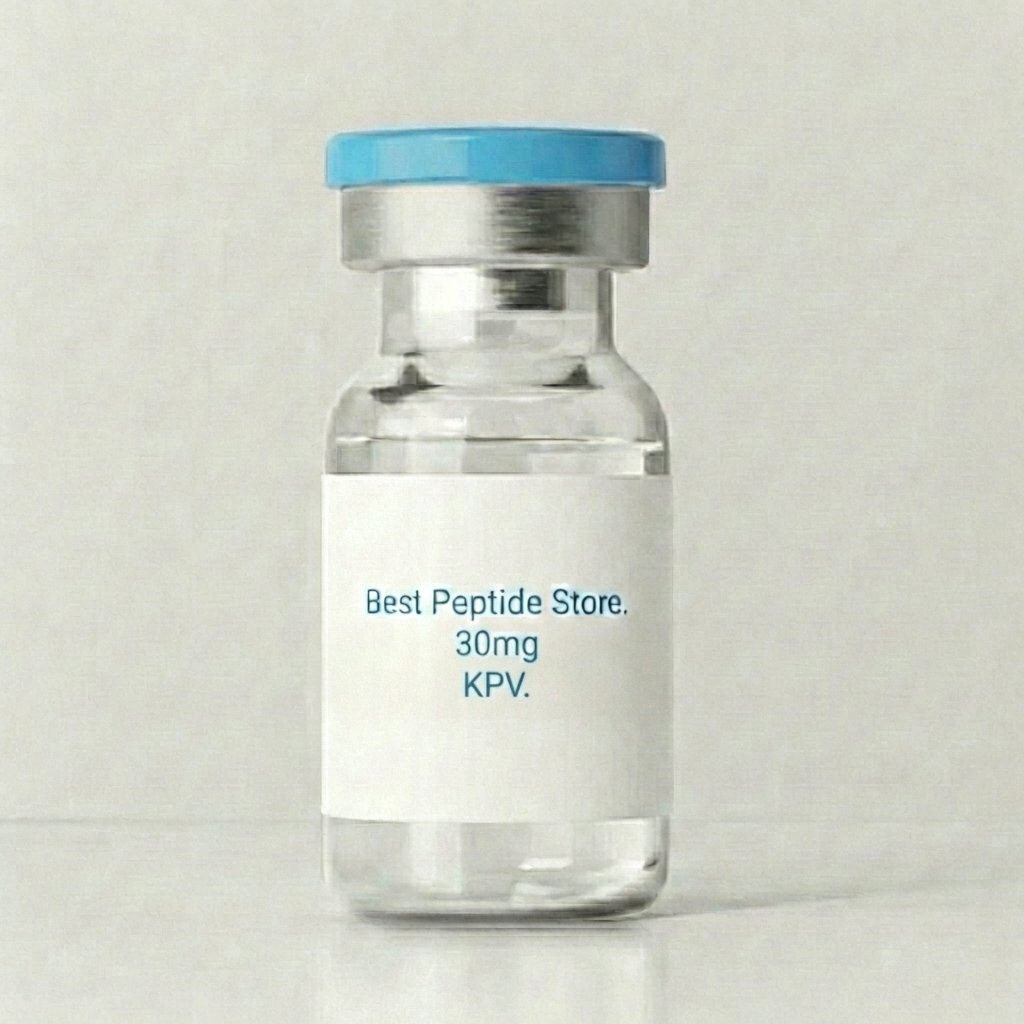
KPV
€85.00
Technical Specifications
| Specification | Detail |
|---|---|
| Product Name | KPV Peptide (Lysine-Proline-Valine) |
| Amino Acid Sequence | Lys-Pro-Val |
| Molecular Formula | C₁₆H₂₉N₅O₄ |
| Molecular Weight | 355.43 Da |
| Purity | ≥99% (HPLC verified) |
| Appearance | White to off-white lyophilized powder |
| Solubility | Soluble in water, PBS, and aqueous buffers |
| Biological Functions | Anti-inflammatory, NF-κB inhibition, MAP kinase modulation, cytokine suppression, PepT1 substrate |
| Key Research Areas | IBD, colitis, gut barrier function, skin inflammation, keratinocyte protection, environmental pollutant damage, acute lung injury, systemic inflammation |
| Storage (Powder) | -20°C; protect from light and moisture |
| Storage (Reconstituted) | 2-8°C (short-term); -20°C (long-term, aliquot) |
| Shipping | Ambient temperature with protective packaging |
| Intended Use | Research and laboratory use only |
| Documentation | Certificate of Analysis provided with each batch |
Premium KPV (Lys-Pro-Val) for Sale | ≥99% Purity | 48-Hour Delivery Across EU & UK
KPV Peptide: The Potent Anti-Inflammatory Tripeptide for Advanced Research
eupeptidelap.co.uk is proud to present KPV Peptide (Lysine-Proline-Valine), a premium research-grade tripeptide manufactured to the highest analytical standards. As a trusted peptide vendor uk and leading EU peptide supplier, we provide researchers across Europe with KPV peptide for sale that delivers exceptional purity, consistency, and documented quality for advanced inflammation, gut health, and dermatological research.
KPV is a short tripeptide (Lys-Pro-Val) derived from the C-terminal sequence of alpha-melanocyte-stimulating hormone (α-MSH), a naturally occurring peptide with potent immunomodulatory properties . Despite its simple structure, KPV has garnered significant scientific interest for its remarkable anti-inflammatory effects that operate through mechanisms distinct from its parent hormone . Research has demonstrated that KPV exhibits anti-inflammatory properties by inhibiting key inflammatory signaling pathways, including nuclear factor-kappa B (NF-κB) and mitogen-activated protein kinase (MAP kinase), while reducing the secretion of pro-inflammatory cytokines .
What makes KPV particularly valuable for research is its unique mechanism of action. Unlike other melanocortin peptides that signal through melanocortin receptors (MC-Rs), studies indicate that KPV’s anti-inflammatory effects are unlikely to be mediated through these classical receptors . Instead, research published in Gastroenterology demonstrated that KPV is transported into cells via the di/tripeptide transporter PepT1, which is normally expressed in the small intestine and induced in the colon during inflammatory conditions . Once inside cells, nanomolar concentrations of KPV effectively inhibit the activation of NF-κB and MAP kinase inflammatory signaling pathways, reducing pro-inflammatory cytokine secretion .
For researchers seeking to buy peptide online EU for investigations into inflammatory bowel disease, gut barrier function, skin inflammation, or systemic inflammatory conditions, eupeptidelap.co.uk offers this premium research compound with comprehensive documentation, including Certificates of Analysis and batch-specific purity data. Whether your laboratory is based in London, Berlin, Paris, or anywhere in the European Union, our guaranteed 48 hour delivery peptide service ensures your research continues without interruption.
The Scientific Foundation of KPV Peptide Research
Discovery and Origin
KPV (Lys-Pro-Val) represents the C-terminal tripeptide fragment of alpha-melanocyte-stimulating hormone (α-MSH), a 13-amino acid peptide derived from pro-opiomelanocortin . α-MSH and its fragments have long been recognized for their anti-inflammatory properties, but research has revealed that the C-terminal KPV region possesses distinct mechanisms of action compared to the core melanocortin peptides . This discovery has positioned KPV as a unique research tool for investigating inflammation pathways independent of classical melanocortin receptor signaling.
Mechanism of Action: PepT1-Mediated Cellular Uptake and Pathway Inhibition
A landmark study published in Gastroenterology (2008) elucidated the primary mechanism through which KPV exerts its cellular effects :
PepT1 Transporter-Mediated Uptake: KPV is transported into cells via the H+/peptide cotransporter PepT1 (SLC15A1), a di/tripeptide transporter normally expressed in the small intestine but induced in the colon during inflammatory bowel disease . Uptake experiments using radiolabeled [(3)H]KPV confirmed that KPV enters intestinal epithelial cells and immune cells through this specific transporter system .
NF-κB Pathway Inhibition: Once internalized, nanomolar concentrations of KPV inhibit the activation of nuclear factor-kappa B (NF-κB), a transcription factor that plays a central role in regulating inflammatory responses . By suppressing NF-κB activation, KPV reduces the expression of multiple pro-inflammatory genes.
MAP Kinase Pathway Modulation: KPV also inhibits the activation of mitogen-activated protein (MAP) kinase inflammatory signaling pathways, further contributing to its anti-inflammatory effects .
Cytokine Suppression: Through these pathway inhibitions, KPV significantly reduces the secretion of pro-inflammatory cytokines, including interleukin-1β (IL-1β) and other inflammatory mediators .
Distinct Mechanism from Melanocortin Receptors
A comprehensive study published in the Journal of Pharmacology and Experimental Therapeutics (2003) systematically compared the anti-inflammatory effects of KPV with other melanocortin peptides . Key findings include:
-
Receptor Independence: The antimigratory effect of KPV was not blocked by melanocortin receptor 3/4 (MC3/4-R) antagonists, whereas the effects of other melanocortin peptides were abolished .
-
No cAMP Accumulation: Unlike α-MSH and other melanocortin receptor agonists that increase intracellular cAMP, KPV failed to elevate cAMP levels, confirming it does not signal through classical melanocortin receptors .
-
IL-1β Inhibition: KPV’s anti-inflammatory properties appear to be mediated through inhibition of IL-1β functions rather than melanocortin receptor activation .
-
MC1-R Independence: KPV remained effective in mice with nonfunctional MC1 receptors (recessive yellow e/e mice), further confirming its receptor-independent mechanism .
KPV in Gastrointestinal Research
Inflammatory Bowel Disease (IBD) Models: Oral administration of KPV has demonstrated significant therapeutic effects in two well-established mouse models of colitis—dextran sulfate sodium (DSS)-induced and trinitrobenzene sulfonic acid (TNBS)-induced colitis . KPV added to drinking water reduced the incidence of colitis, indicated by decreased pro-inflammatory cytokine expression and improved histological outcomes .
Enhanced Delivery Systems: Recent groundbreaking research published in Science Advances (2026) developed a self-immolative peptide prodrug conjugate (SIPPC) platform for inflammation-targeted oral delivery of KPV . This innovative approach:
-
Achieved 3.8-fold greater colonic accumulation of KPV compared to free peptide in colitis mouse models
-
Demonstrated enhanced efficacy even at 20-fold lower doses
-
Exhibited remarkable gastrointestinal stability and efficient mucus penetration
-
Enabled ROS-responsive release specifically at inflamed sites
Beyond colitis, oral proKPV substantially accumulated in inflamed lungs and exhibited potent anti-inflammatory efficacy in mice with acute lung injury, demonstrating the broad potential of KPV-based therapeutics for inflammatory disorders .
KPV in Dermatological and Skin Research
Keratinocyte Protection: A 2025 study published in Tissue Cell investigated the protective effects of KPV against fine particulate matter (PM10)-induced oxidative damage and inflammation in human HaCaT keratinocytes . Key findings include:
-
KPV at 50 μg/mL restored cell viability disrupted by PM10 exposure
-
KPV reduced IL-1β secretion through suppression of reactive oxygen species (ROS) production
-
KPV inhibited ROS-mediated activation of extracellular signal-regulated kinase and p38 MAP kinase pathways
-
KPV decreased expression of apoptosis-related proteins (Bax, Bcl-2, and cleaved caspase-3)
-
KPV effectively blocked ROS-mediated caspase-1 activation, reducing IL-1β secretion
In a three-dimensional (3D) skin model, KPV treatment effectively attenuated inflammatory cell death induced by PM10, suggesting its potential for preventing environmental pollutant-related skin damage .
Transdermal Delivery Research: Studies have investigated various enhancement strategies for KPV delivery across human skin, including iontophoresis (ITP), microneedles (MN), and their combination . While passive diffusion of KPV was below detectable levels, MN treatment increased permeation to 4.4 μg/cm²/h, and ITP + MN combination increased permeation rate by 35-fold compared to MN alone . Confocal studies confirmed that fluorescently labeled KPV migrated through the stratum corneum, along microchannels, and into lower epidermal tissue .
KPV in Inflammation Research
Crystal-Induced Peritonitis Model: KPV demonstrated significant anti-inflammatory effects in a model of monosodium urate (MSU) crystal-induced peritonitis, reducing polymorphonuclear leukocyte accumulation in the peritoneal cavity by 42% at optimal dosing . This effect exhibited a bell-shaped dose response, with maximal inhibition seen at 9 nmol .
IL-1β-Induced Inflammation: KPV maintained its anti-inflammatory properties in IL-1β-induced peritonitis, further supporting its mechanism of action through IL-1β pathway inhibition .
Quality Assurance: Setting the Standard for Research Compounds
Manufacturing Excellence
eupeptidelap.co.uk sources KPV Peptide from certified GMP facilities with rigorous quality control protocols:
-
HPLC Purity Analysis: ≥99% purity verified by high-performance liquid chromatography
-
Mass Spectrometry Verification: Molecular weight confirmation via LC-HRMS
-
Batch-Specific Certificates of Analysis: Complete documentation for each production run
-
Third-Party Lab Testing: Independent verification of purity and potency
-
Peptide Content Determination: Accurate quantification of peptide mass
Chemical and Product Specifications
| Specification | Detail |
|---|---|
| Product Name | KPV Peptide (Lysine-Proline-Valine) |
| Amino Acid Sequence | Lys-Pro-Val |
| Molecular Formula | C₁₆H₂₉N₅O₄ |
| Molecular Weight | 355.43 Da |
| CAS Number | Not assigned for tripeptide |
| Purity | ≥99% (HPLC verified) |
| Appearance | White to off-white lyophilized powder |
| Form | Lyophilized powder |
| Solubility | Soluble in water, PBS, and aqueous buffers |
| Biological Functions | Anti-inflammatory, NF-κB inhibition, MAP kinase modulation, cytokine suppression |
| Key Targets | PepT1 transporter, NF-κB pathway, MAP kinase pathway, IL-1β |
| Storage (Powder) | -20°C; protect from light and moisture |
| Storage (Reconstituted) | 2-8°C for short-term; aliquot and freeze at -20°C for longer storage |
| Shipping | Ambient temperature with protective packaging |
| Intended Use | Research and laboratory use only |
| Documentation | Certificate of Analysis provided with each batch |
Stability and Handling Guidelines
Lyophilized Powder Storage: KPV peptide powder should be stored at -20°C in a dry, dark environment, protected from light and moisture. Under proper storage conditions, lyophilized peptides maintain stability for extended periods. Use manual-defrost freezers and store vials in the back (not doors) to avoid temperature fluctuations.
Reconstitution Protocol:
-
Allow vial and solvent to reach ambient temperature before opening to prevent condensation
-
Reconstitute using sterile water, PBS, or appropriate buffer according to research protocol
-
Gently swirl until powder is completely dissolved—do not shake vigorously to prevent peptide bond damage
-
Use fresh sterile needles for each vial access
-
Clean rubber stoppers with alcohol swabs before each puncture
Reconstituted Solution Storage: Once reconstituted, KPV solutions should be stored at 2-8°C for short-term use. For longer-term storage, aliquot into single-use portions and freeze at -20°C. Avoid repeated freeze-thaw cycles as this can degrade the peptide.
Protection from Light and Moisture:
-
Store in amber vials or protect from light
-
Keep vials tightly sealed when not in use
-
Allow frozen vials to reach room temperature before opening to prevent condensation
Key Benefits
-
Premium Quality Manufacturing: GMP-certified production, ≥99% HPLC-verified purity
-
Well-Characterized Tripeptide: Extensive peer-reviewed literature in gastroenterology, dermatology, and immunology research
-
PepT1-Mediated Uptake: Specifically transported via di/tripeptide transporter, active in intestinal epithelial and immune cells
-
NF-κB Pathway Inhibition: Suppresses activation of master inflammatory transcription factor at nanomolar concentrations
-
MAP Kinase Modulation: Inhibits ERK and p38 MAP kinase inflammatory signaling pathways
-
Cytokine Suppression: Reduces pro-inflammatory cytokines including IL-1β
-
IBD Research Applications: Reduces colitis incidence and inflammation in DSS and TNBS models
-
Enhanced Oral Delivery: Novel prodrug formulations achieve 3.8-fold greater colonic accumulation
-
Gut Barrier Studies: Supports research into intestinal permeability and epithelial repair
-
Keratinocyte Protection: Mitigates fine dust-induced oxidative damage and apoptosis in skin cells
-
Environmental Pollutant Research: Reduces PM10-induced inflammation and pyroptosis in 3D skin models
-
ROS Scavenging: Inhibits reactive oxygen species production and oxidative stress
-
Acute Lung Injury Models: Accumulates in inflamed lungs with potent anti-inflammatory effects
-
Receptor-Independent Mechanism: Distinct from melanocortin receptor signaling, not blocked by MC-R antagonists
-
IL-1β Pathway Inhibition: Anti-inflammatory effects mediated through IL-1β function blockade
-
Transdermal Delivery Research: Characterized permeation enhancement via iontophoresis and microneedles
-
Autoimmune Research Applications: Potential relevance for conditions involving immune dysregulation
-
Well-Conserved Peptide: Derived from endogenous α-MSH with favorable safety profile in preclinical studies
-
Comprehensive Documentation: Certificates of Analysis with batch-specific purity data
-
48-Hour EU & UK Delivery: Rapid shipping to research facilities across Europe
-
Batch Consistency: Rigorous quality control ensures lot-to-lot reproducibility
-
EU Sourced: Available from within the European Union
Frequently Asked Questions
Q: What is KPV peptide and where does it come from?
A: KPV (Lysine-Proline-Valine) is a tripeptide derived from the C-terminal sequence of alpha-melanocyte-stimulating hormone (α-MSH) . Despite its simple structure, KPV possesses potent anti-inflammatory properties that operate through mechanisms distinct from its parent hormone, making it a valuable tool for inflammation research .
Q: What is the mechanism of action of KPV?
A: KPV is transported into cells via the di/tripeptide transporter PepT1, which is expressed in the small intestine and induced in the colon during inflammation . Once inside cells, KPV inhibits the activation of NF-κB and MAP kinase inflammatory signaling pathways at nanomolar concentrations, reducing the secretion of pro-inflammatory cytokines including IL-1β . Unlike other melanocortin peptides, KPV does not signal through classical melanocortin receptors .
Q: What research areas commonly use KPV?
A: KPV is widely used in gastrointestinal research (IBD, colitis, gut barrier function) , dermatological research (keratinocyte protection, environmental pollutant damage) , inflammation research (cytokine modulation, NF-κB pathway studies) , respiratory research (acute lung injury) , and autoimmune research .
Q: What purity level can I expect when I buy KPV from eupeptidelap.co.uk?
A: All KPV Peptide from eupeptidelap.co.uk is tested to ≥99% purity by HPLC. Each batch is individually analyzed, and Certificates of Analysis are provided with every order, ensuring you receive material suitable for rigorous research applications.
Q: How should I store KPV for long-term stability?
A: Store lyophilized KPV powder at -20°C, protected from light and moisture. After reconstitution, store at 2-8°C for short-term use. For longer-term storage, aliquot into single-use portions and freeze at -20°C. Avoid repeated freeze-thaw cycles as this can degrade the peptide.
Q: Has KPV been studied in inflammatory bowel disease models?
A: Yes, extensively. Oral administration of KPV significantly reduced inflammation in both DSS- and TNBS-induced colitis mouse models, decreasing pro-inflammatory cytokine expression and improving histological outcomes . Recent advances in prodrug formulations have achieved 3.8-fold greater colonic accumulation with enhanced efficacy .
Q: Does KPV have applications in skin research?
A: Yes. Recent studies demonstrate that KPV protects keratinocytes from fine dust-induced oxidative damage, inflammation, and apoptosis . KPV inhibits ROS production, suppresses MAP kinase activation, and reduces IL-1β secretion in PM10-exposed skin cells . Transdermal delivery research has characterized KPV permeation enhancement strategies .
Q: Do you ship KPV to EU countries?
A: Yes. As a dedicated EU peptide supplier, we ship KPV Peptide to all European Union member states with our guaranteed 48 hour delivery peptide service. Our EU fulfilment centre ensures rapid delivery without customs delays. All shipments use protective packaging to maintain compound integrity during transit.
Q: What documentation do you provide with KPV orders?
A: Every order includes a Certificate of Analysis with batch-specific purity data. Additional documentation, including HPLC chromatograms and mass spectrometry data, is available upon request for researchers requiring comprehensive analytical verification.
Q: How does KPV differ from other anti-inflammatory peptides?
A: Unlike many anti-inflammatory peptides that signal through specific receptors, KPV operates through PepT1-mediated cellular uptake and directly inhibits intracellular inflammatory pathways including NF-κB and MAP kinase . Its mechanism is distinct from melanocortin receptor agonists, and its effects are not blocked by melanocortin receptor antagonists .
Q: Has KPV been studied in respiratory inflammation models?
A: Yes. Recent research demonstrated that oral administration of KPV prodrugs (proKPV) substantially accumulated in inflamed lungs and exhibited potent anti-inflammatory efficacy in mice with acute lung injury .
Q: What is the molecular weight and sequence of KPV?
A: KPV has the amino acid sequence Lys-Pro-Val, with a molecular formula of C₁₆H₂₉N₅O₄ and a molecular weight of 355.43 Da.
Q: Do you offer bulk quantities of KPV for institutional research?
A: Yes. We accommodate bulk orders for research institutions. Contact our team at sales@eupeptidelap.co.uk for volume pricing, custom requirements, and supply agreements for ongoing research programs.
Advance Your Research with KPV Peptide
eupeptidelap.co.uk is your trusted source for KPV Peptide, the premium choice for researchers investigating inflammation pathways, gastrointestinal health, and dermatological protection. With extensive peer-reviewed literature spanning gastroenterology, dermatology, and immunology, KPV represents a well-characterized tripeptide with unique PepT1-mediated uptake and potent anti-inflammatory properties. ...........................................
Whether you are exploring inflammatory bowel disease mechanisms, designing skin protection studies, investigating cytokine signaling pathways, or researching novel delivery systems, our rigorously tested compound provides the quality and consistency your work demands. . . . . . . . . . . . . . . . . . . . . . . . . . . . . . . . . . . . . . . . . .
Order today and experience the eupeptidelap.co.uk difference – premium quality, rapid 48-hour delivery across the EU and UK, and expert support for the European research community.
Related products
3-MeO-PCP
Buy Peptide Online EU
Buy Peptide Online EU
Clonazolam
Buy Peptide Online EU


Buy Peptide Online


Buy Peptide Online EU
Buy Peptide Online EU
NAD+