

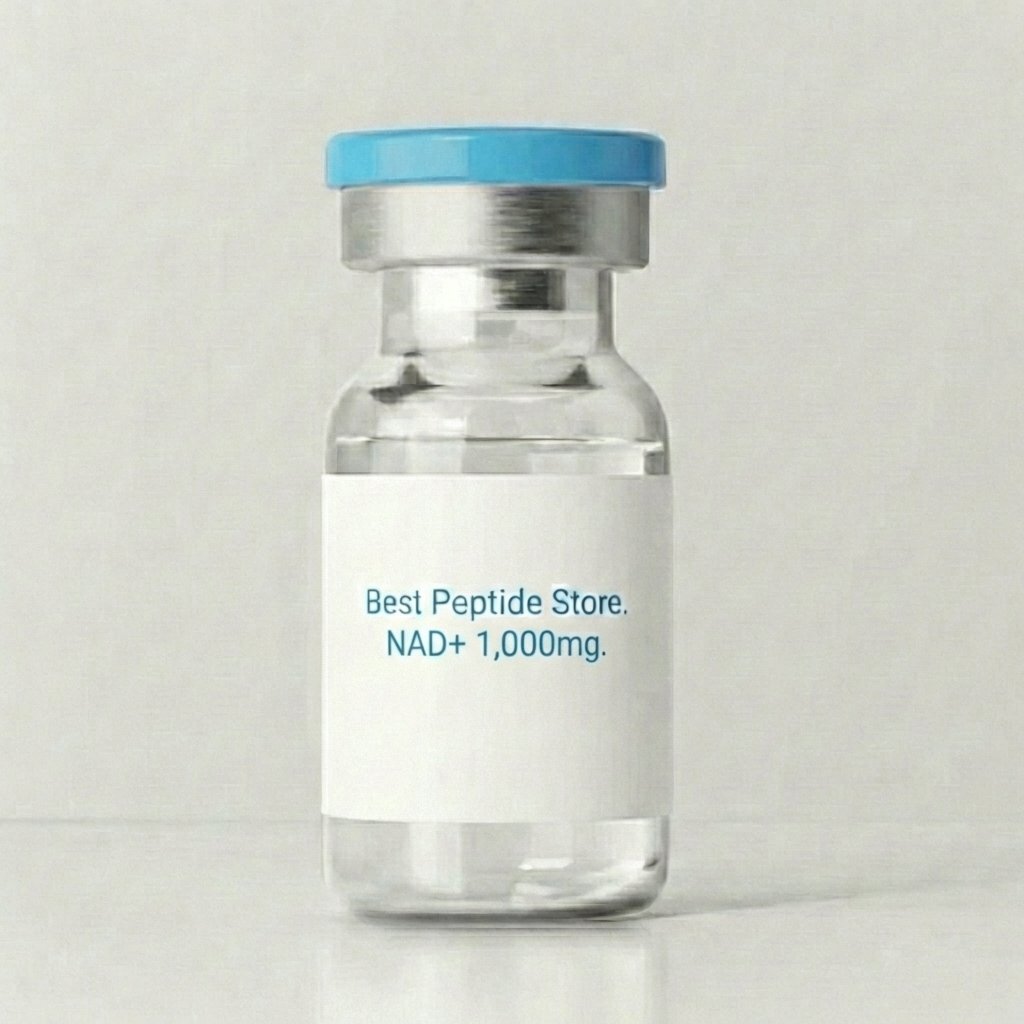
NAD+ 1,000mg
€152.00
Technical Specifications
| Specification | Detail |
|---|---|
| Product Name | NAD+ (Nicotinamide Adenine Dinucleotide) |
| CAS Number | 53-84-9 |
| Molecular Formula | C₂₁H₂₇N₇O₁₄P₂ |
| Molecular Weight | 663.43 Da |
| Purity | ≥99% (HPLC verified) |
| Appearance | White to off-white powder |
| Solubility | Water: 50 mg/mL; PBS: 10 mg/mL; Ethanol: 0.1 mg/mL |
| Biological Role | Redox coenzyme, electron carrier, enzyme substrate |
| Key Enzymes | PARPs, sirtuins, CD38, NMNATs, NAMPT |
| Storage (Powder) | -20°C; protect from light and moisture |
| Storage (Reconstituted) | 2-8°C (1 week); -20°C (1 month, aliquot) |
| Shipping | Ambient temperature with protective packaging |
| Intended Use | Research and laboratory use only |
| Documentation | Certificate of Analysis provided with each batch |
Research-Grade NAD+ Powder | ≥99% Purity | 1,000mg per Vial | 48-Hour Delivery Across EU & UK
NAD+ (Nicotinamide Adenine Dinucleotide): The Master Molecule of Cellular Energy & Longevity Research
eupeptidelap.co.uk is proud to present NAD+ 1,000mg, a premium research-grade nicotinamide adenine dinucleotide compound manufactured to the highest analytical standards. As a trusted peptide vendor uk and leading EU peptide supplier, we provide researchers across Europe with NAD+ for sale that delivers exceptional purity, consistency, and documented quality for advanced cellular metabolism studies.
Nicotinamide adenine dinucleotide (NAD+) is an essential coenzyme found in every living cell, playing a fundamental role in energy metabolism, mitochondrial function, DNA repair, and cellular signaling pathways . This critical molecule exists in two forms: the oxidized form NAD+ and its reduced counterpart NADH, which work together to facilitate the transfer of electrons in metabolic reactions . NAD+ is particularly concentrated in tissues with high energy demands, such as the brain and skeletal muscle, underscoring its importance in cellular bioenergetics .
The scientific interest in NAD+ has grown exponentially in recent years due to its central role in the aging process and age-related diseases. Research has consistently demonstrated that NAD+ levels naturally decline with age across multiple species, correlating with various hallmarks of aging including mitochondrial dysfunction, genomic instability, and altered cellular communication . This age-related decline has been observed in human tissues including skin, liver, and brain, though the rate of decline varies between tissue types .
As a vital substrate for numerous enzymatic processes, NAD+ is consumed by key regulatory enzymes including poly-ADP-ribose polymerases (PARPs) involved in DNA repair, sirtuins that regulate gene expression and cellular stress responses, and CD38 which modulates calcium signaling and inflammation . With age, DNA damage and chronic inflammation increase in organs, resulting in overconsumption of NAD+ via PARP and CD38 activation. The resulting decline in NAD+ levels decreases the activity of sirtuins and PARPs, impairs energy metabolism, and ultimately contributes to aging and age-related diseases .
For researchers seeking to buy peptide online EU for investigations into cellular metabolism, mitochondrial function, neurodegenerative diseases, or aging mechanisms, eupeptidelap.co.uk offers this premium research compound with comprehensive documentation, including Certificates of Analysis and batch-specific purity data. Whether your laboratory is based in London, Berlin, Paris, or anywhere in the European Union, our guaranteed 48 hour delivery peptide service ensures your research continues without interruption.
The Scientific Foundation of NAD+ Research
NAD+ Metabolism and Cellular Homeostasis
NAD+ is synthesized through multiple interconnected pathways in mammalian cells, each utilizing different molecular precursors :
De Novo Synthesis Pathway: NAD+ can be generated from the amino acid tryptophan through the kynurenine pathway, though this occurs primarily in the liver and kidneys . Tryptophan is oxygenated to N′-formylkynurenine by tryptophan 2,3-dioxygenase (TDO) or indoleamine 2,3-dioxygenase (IDO), eventually being converted to quinolinic acid and entering the Preiss-Handler pathway .
Preiss-Handler Pathway: This pathway converts nicotinic acid (NA) into nicotinic acid mononucleotide (NAMN) through the rate-limiting enzyme nicotinic acid phosphoribosyltransferase (NAPRT). NAMN is then converted to nicotinic acid adenine dinucleotide (NAAD) and finally to NAD+ via NAD+ synthase .
Salvage Pathway: The primary NAD+ synthesis pathway in mammals, the salvage pathway recycles nicotinamide (NAM) generated as a byproduct of NAD+-consuming enzymes. Nicotinamide phosphoribosyltransferase (NAMPT) converts NAM to nicotinamide mononucleotide (NMN) in a rate-limiting reaction that determines the efficiency of NAD+ synthesis . NMN is then converted to NAD+ by nicotinamide mononucleotide adenylyltransferases (NMNAT1-3), which are differentially expressed across tissues .
Nicotinamide Riboside Kinase (NRK) Pathway: The NAD+ precursor nicotinamide riboside (NR) is phosphorylated by nicotinamide riboside kinase 1 or 2 (NRK1/2) to form NMN, which then enters the salvage pathway . NRK1 is expressed in most tissues, while NRK2 is restricted to skeletal muscle, heart, and white adipose tissue .
NAD+ and Mitochondrial Function
Mitochondria possess their own NAD+ pool, which is maintained through a combination of local synthesis and import mechanisms . The mitochondrial NAD+ pool is particularly important because NAD+ is required for multiple mitochondrial processes:
-
Tricarboxylic Acid (TCA) Cycle: NAD+ is reduced to NADH in the TCA cycle, with NAD+ levels determining the efficiency of mitochondrial energy production
-
Electron Transport Chain (ETC): NADH is oxidized back to NAD+ in the ETC, generating ATP through oxidative phosphorylation
-
Mitochondrial DNA Repair: PARP enzymes within mitochondria participate in maintaining mitochondrial DNA integrity
-
Mitophagy Regulation: NAD+ influences the removal of damaged mitochondria through mitophagy pathways
Recent research has revealed that mitochondria act as a rheostat to maintain cellular NAD+ levels upon excessive consumption . When NAD+ is overconsumed in specific subcellular compartments, mitochondria can compensate by importing NAD+ through the SLC25A51 transporter and can reversibly cleave NAD+ to nicotinamide mononucleotide and ATP when NMNAT3 is present. This buffering capacity helps maintain cellular NAD+ homeostasis unless mitochondria themselves are directly targeted .
NAD+ Decline in Aging and Disease
The age-related decline in NAD+ has been implicated in numerous pathological conditions:
| Condition | NAD+ Involvement | Research Evidence |
|---|---|---|
| Neurodegeneration | Reduced NAD+ impairs neuronal energy metabolism and DNA repair | NAD+ precursors improve cognitive function in Alzheimer’s and Parkinson’s models |
| Metabolic Disease | NAD+ decline disrupts glucose and lipid metabolism | NAD+ supplementation improves insulin sensitivity and metabolic parameters |
| Cardiovascular Disease | Endothelial NAD+ depletion contributes to vascular dysfunction | NAD+ precursors improve endothelial function in aged models |
| Sarcopenia | Muscle NAD+ loss impairs mitochondrial function and protein homeostasis | NAD+ restoration improves muscle strength and function |
| DNA Repair Disorders | Excessive PARP activation depletes NAD+ in premature aging syndromes | NAD+ supplementation shows promise in Werner, Cockayne, and xeroderma pigmentosum |
NAD+ in Premature Aging and DNA Repair Deficiencies
A particularly promising area of NAD+ research involves rare genetic diseases characterized by premature aging and DNA repair deficiencies . Conditions such as Werner syndrome, Cockayne syndrome, xeroderma pigmentosum, ataxia-telangiectasia, and Bloom syndrome are monogenic disorders resulting from mutations in genes critical for DNA metabolism and repair . In these disorders, defective DNA repair leads to accumulation of DNA damage, excessive activation of PARP enzymes (hyperparylation), and consequent NAD+ depletion .
In model systems that mimic these disorders, as well as in emerging human studies, NAD+ supplementation has demonstrated promising benefits, including improved DNA repair capacity and enhanced mitochondrial function . These findings suggest that NAD+ supplementation could serve as an effective intervention for rare genetic diseases characterized by premature aging, and more broadly open new avenues for general aging research .
NAD+ in Cognitive and Neurodegenerative Disease Research
A systematic review of preclinical studies examining NAD+ precursors in cognitive disease models revealed consistent neuroprotective effects . Analysis of 30 studies investigating NAD+ precursors (including nicotinamide, nicotinamide riboside, and nicotinamide mononucleotide) in rodent models of aging, Alzheimer’s disease, traumatic brain injury, diabetes, and vascular dementia demonstrated that NAD+ treatment rescues cognitive deficits by inhibiting inflammation, oxidative stress, and apoptosis while improving mitochondrial function .
Key findings from the review include:
-
Aging Models: NADH treatment (10-100 mg/kg) improved performance in Morris water maze tests . NMN therapy (100 mg/kg for 28 days) improved learning and memory impairment induced by aging and decreased mitochondrial dysfunction
-
Alzheimer’s Disease Models: NAM and NR demonstrated ability to reduce β-amyloid generation and tau phosphorylation
-
Mechanistic Insights: NAD+ precursors improve cognitive function through multiple pathways including enhanced mitochondrial bioenergetics, reduced oxidative stress, and attenuated neuroinflammation
A groundbreaking international study published in Science Advances (2025) revealed that NAD+ restores memory in Alzheimer’s disease models by correcting RNA splicing errors . The research demonstrated that NAD+ works through a previously unidentified RNA-splicing pathway regulated by the protein EVA1C. When NAD+ levels are increased, EVA1C helps correct mistakes in RNA splicing, improving the function of hundreds of genes crucial for brain health and reversing neurodegenerative damage caused by tau protein .
Quality Assurance: Setting the Standard for Research Compounds
Manufacturing Excellence
eupeptidelap.co.uk sources NAD+ 1,000mg from certified GMP facilities with rigorous quality control protocols:
-
HPLC Purity Analysis: ≥99% purity verified by high-performance liquid chromatography
-
Mass Spectrometry Verification: Molecular weight confirmation (663.43 Da) via LC-HRMS
-
Batch-Specific Certificates of Analysis: Complete documentation for each production run
-
Third-Party Lab Testing: Independent verification of purity and potency
-
Non-GMO & Gluten-Free: Suitable for diverse research applications
Chemical and Product Specifications
| Specification | Detail |
|---|---|
| Product Name | NAD+ (Nicotinamide Adenine Dinucleotide) |
| CAS Number | 53-84-9 |
| Molecular Formula | C₂₁H₂₇N₇O₁₄P₂ |
| Molecular Weight | 663.43 Da |
| Purity | ≥99% (HPLC verified) |
| Appearance | White to off-white powder |
| Form | Lyophilized powder |
| Solubility | Soluble in water (50 mg/mL), PBS (10 mg/mL), Ethanol (0.1 mg/mL) |
| Storage (Powder) | -20°C; protect from light and moisture |
| Storage (Reconstituted) | 2-8°C for up to 1 week; -20°C for up to 1 month (aliquot to avoid freeze-thaw) |
| Shipping | Ambient temperature with protective packaging |
| Intended Use | Research and laboratory use only |
| Documentation | Certificate of Analysis provided with each batch |
Stability and Handling Guidelines
Lyophilized Powder Storage: NAD+ powder should be stored at -20°C in a dry, dark environment, protected from light and moisture. In its lyophilized form, NAD+ maintains stability for extended periods when stored properly. Use manual-defrost freezers and store vials in the back (not doors) to avoid temperature fluctuations .
Reconstitution Protocol:
-
Allow vial and solvent to reach ambient temperature before opening to prevent condensation
-
Reconstitute using sterile water, PBS, or appropriate buffer according to research protocol
-
Gently swirl until powder is completely dissolved—do not shake vigorously
-
Use fresh sterile needles for each vial access
-
Clean rubber stoppers with alcohol swabs before each puncture
Reconstituted Solution Storage: Once reconstituted, NAD+ solutions should be stored at 2-8°C for short-term use (up to 1 week). For longer-term storage, aliquot into single-use portions and freeze at -20°C for up to 1 month. Avoid repeated freeze-thaw cycles as this can degrade the compound .
Protection from Light and Moisture:
-
Store in amber vials or protect from light with aluminum foil
-
Keep vials tightly sealed when not in use
-
Allow frozen vials to reach room temperature in a desiccator before opening to prevent condensation
Key Benefits
-
Premium Quality Manufacturing: GMP-certified production, ≥99% HPLC-verified purity
-
High Concentration: 1,000mg per vial—substantial quantity for extended research studies
-
Essential Redox Cofactor: Critical role in energy metabolism, mitochondrial function, and cellular homeostasis
-
DNA Repair Research: Substrate for PARP enzymes involved in detecting and signaling DNA damage
-
Sirtuin Activation Research: Required for NAD+-dependent deacetylases that regulate gene expression and stress responses
-
Aging Research: Investigate mechanisms of age-related NAD+ decline and therapeutic interventions
-
Mitochondrial Function Studies: Essential for TCA cycle, electron transport chain, and mitochondrial homeostasis
-
Neurodegenerative Disease Research: Promising results in Alzheimer’s, Parkinson’s, and cognitive decline models
-
Cognitive Function Studies: NAD+ treatment rescues cognitive deficits by inhibiting inflammation, oxidative stress, and apoptosis
-
RNA Splicing Research: NAD+ corrects RNA splicing errors through EVA1C-mediated pathways
-
Metabolic Disease Research: Implicated in glucose and lipid metabolism regulation
-
Cardiovascular Research: Supports endothelial function and vascular health
-
Premature Aging Disorders: Potential intervention for Werner, Cockayne, and xeroderma pigmentosum
-
Compartmentalized Pools: Study interconnected NAD+ pools across mitochondria, nucleus, cytosol, and peroxisomes
-
Mitochondrial Buffering Capacity: Research how mitochondria maintain cellular NAD+ homeostasis
-
Well-Characterized Molecule: Extensive peer-reviewed literature spanning decades
-
Comprehensive Documentation: Certificates of Analysis with batch-specific purity data
-
48-Hour EU & UK Delivery: Rapid shipping to research facilities across Europe
-
Batch Consistency: Rigorous quality control ensures lot-to-lot reproducibility
-
EU Sourced: Available from within the European Union
Frequently Asked Questions
Q: Is NAD+ 1,000mg suitable for human consumption?
A: No. NAD+ 1,000mg from eupeptidelap.co.uk is strictly for research and laboratory use only. It is not for human or animal consumption, and must not be used for therapeutic, diagnostic, or clinical applications. While NAD+ precursors like nicotinamide riboside (NR) are authorized as novel foods in Great Britain with specific maximum permitted intakes, research-grade material is intended for investigational purposes only . Researchers must handle this compound in accordance with institutional safety guidelines and local regulations.
Q: What purity level can I expect when I buy NAD+ from eupeptidelap.co.uk?
A: All NAD+ 1,000mg from eupeptidelap.co.uk is tested to ≥99% purity by HPLC. Each batch is individually analyzed, and Certificates of Analysis are provided with every order, ensuring you receive material suitable for rigorous research applications.
Q: How should I store NAD+ for long-term stability?
A: Store lyophilized NAD+ powder at -20°C, protected from light and moisture . Under these conditions, the powder maintains stability for extended periods. After reconstitution, store at 2-8°C for up to 1 week or aliquot into single-use portions and freeze at -20°C for up to 1 month. Avoid repeated freeze-thaw cycles .
Q: What is the molecular weight and formula of NAD+?
A: NAD+ has the molecular formula C₂₁H₂₇N₇O₁₄P₂ and a molecular weight of 663.43 Da.
Q: What is the biological role of NAD+ in cellular metabolism?
A: NAD+ is an essential redox coenzyme that exists between the oxidized form NAD+ and its reduced form NADH . These ratios are particularly important for energy generation, metabolic homeostasis, mitochondrial function, and DNA repair . NAD+ is involved in glycolysis, fatty acid β-oxidation, the TCA cycle, and mitochondrial electron transport . Beyond redox reactions, NAD+ serves as a substrate for PARPs (DNA repair), sirtuins (gene regulation), and CD38 (calcium signaling) .
Q: What research areas commonly use NAD+?
A: NAD+ is widely used in aging research, mitochondrial function studies, neurodegenerative disease research (Alzheimer’s, Parkinson’s), DNA repair studies, metabolic disease research, cardiovascular research, and premature aging disorder investigations (Werner, Cockayne, xeroderma pigmentosum) .
Q: How does NAD+ decline with age?
A: Research has demonstrated that NAD+ levels naturally decline with age across multiple species, correlating with various hallmarks of aging including mitochondrial dysfunction, genomic instability, and altered cellular communication . This age-related decline has been observed in human tissues including skin, liver, and brain, though the rate of decline varies between tissue types . With age, DNA damage and chronic inflammation increase in organs, resulting in overconsumption of NAD+ via PARP and CD38 activation .
Q: Do you ship NAD+ to EU countries?
A: Yes. As a dedicated EU peptide supplier, we ship NAD+ 1,000mg to all European Union member states with our guaranteed 48 hour delivery peptide service. Our EU fulfilment centre ensures rapid delivery without customs delays. All shipments use protective packaging to maintain compound integrity during transit.
Q: What documentation do you provide with NAD+ orders?
A: Every order includes a Certificate of Analysis with batch-specific purity data. Additional documentation, including HPLC chromatograms and mass spectrometry data, is available upon request for researchers requiring comprehensive analytical verification.
Q: What are the key enzymes that consume NAD+?
A: NAD+-consuming enzymes include poly-ADP-ribose polymerases (PARPs), which are involved in DNA repair; sirtuins (SIRT1-7), which regulate gene expression and cellular stress responses; and CD38, which modulates calcium signaling and inflammation . These enzymes metabolize NAD+ and release nicotinamide (NAM) as a byproduct, which can be recycled in the salvage pathway .
Q: How is NAD+ synthesized in cells?
A: NAD+ is synthesized through multiple pathways including the de novo pathway from tryptophan, the Preiss-Handler pathway from nicotinic acid, the salvage pathway from nicotinamide (via NAMPT), and the nicotinamide riboside kinase pathway from NR . The salvage pathway, involving the rate-limiting enzyme NAMPT, provides the primary NAD+ synthesis route in mammals .
Q: What is the role of mitochondria in NAD+ homeostasis?
A: Recent research has revealed that mitochondria act as a rheostat to maintain cellular NAD+ levels upon excessive consumption . Mitochondria maintain NAD+ by import through the SLC25A51 transporter and can reversibly cleave NAD+ to nicotinamide mononucleotide and ATP when NMNAT3 is present . This buffering capacity helps maintain cellular NAD+ homeostasis unless mitochondria themselves are directly targeted .
Q: What evidence supports NAD+ in Alzheimer’s disease research?
A: A groundbreaking study published in Science Advances (2025) demonstrated that NAD+ restores memory in Alzheimer’s disease models by correcting RNA splicing errors through the protein EVA1C . Additionally, a systematic review of preclinical studies found that NAD+ precursors improve cognitive function by inhibiting inflammation, oxidative stress, and apoptosis while improving mitochondrial function in Alzheimer’s models .
Q: Do you offer bulk quantities of NAD+ for institutional research?
A: Yes. We accommodate bulk orders for research institutions. Contact our team at sales@eupeptidelap.co.uk for volume pricing, custom requirements, and supply agreements for ongoing research programs.
Q: What is the relationship between NAD+ and premature aging disorders?
A: In DNA repair disorders such as Werner syndrome, Cockayne syndrome, and xeroderma pigmentosum, defective DNA repair leads to accumulation of DNA damage, excessive activation of PARP enzymes (hyperparylation), and consequent NAD+ depletion . In model systems that mimic these disorders, NAD+ supplementation has demonstrated promising benefits, including improved DNA repair capacity and enhanced mitochondrial function .
Advance Your Research with NAD+ 1,000mg
eupeptidelap.co.uk is your trusted source for NAD+ 1,000mg, the premium choice for researchers investigating cellular metabolism, mitochondrial function, aging mechanisms, and neurodegenerative diseases. With over a century of biochemical research establishing its central role in cellular energetics and decades of translational studies demonstrating its therapeutic potential, NAD+ represents one of the most fundamental and versatile molecules in the research community . ...........................................
Whether you are exploring mitochondrial bioenergetics, designing aging studies, investigating DNA repair pathways, or researching neuroprotective mechanisms, our rigorously tested compound provides the quality and consistency your work demands. . . . . . . . . . . . . . . . . . . . . . . . . . . . . . . . . . . . . . . . . .
Order today and experience the eupeptidelap.co.uk difference – premium quality, rapid 48-hour delivery across the EU and UK, and expert support for the European research community.
Related products

Buy Peptide Online EU

Buy Peptide Online EU

Buy Peptide Online EU

Buy Peptide Online EU
Buy Peptide Online EU
Buy Peptide Online EU
Buy Peptide Online EU


Buy Peptide Online EU