

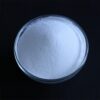

Liquid Caustic Soda Lye 50% / Sodium Hydroxide Lye 50%
€295.00
Other Trading Names:
- Liquid caustic soda
- Lye
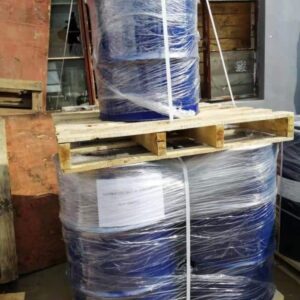
Type of Packaging :
- 250kg plastic drum
- 500kg plastic drum
HS Code:
380210
FOB Price (Per Ton) $295.00
Liquid Caustic Soda Lye 50%: High-Purity Industrial Alkali Solutions
Managing large-scale chemical processing, water neutralization, or pulp and paper production requires highly consistent, high-density alkaline commodities. Liquid Caustic Soda Lye 50%, systematically designated as Sodium Hydroxide ($\text{NaOH}$) solution, is an industry-standard, highly alkaline aqueous solution.
By eliminating the dusting hazards, localized exothermic melting risks, and dissolution steps associated with dry caustic flakes or pearls, 50% liquid lye offers a highly efficient, pumpable format tailored for automated dosing systems and bulk industrial workflows.
Chemical Synthesis and Rheological Profile
Industrial sodium hydroxide solution is primarily manufactured via the chlor-alkali process, utilizing the electrolysis of aqueous sodium chloride ($\text{NaCl}$) brines. Modern manufacturing facilities predominantly employ high-efficiency membrane cell technologies. This design prevents salt contamination, yielding an exceptionally pure caustic liquid with trace chlorate levels.
The Temperature-Viscosity Threshold
A critical physical attribute of 50% liquid caustic soda is its steep crystallization threshold. At a 50% mass fraction, the solution has a freezing point of 12°C (53.6°F). If fluid temperatures drop below this point, the solution solidifies into a dense crystalline hydrate matrix. Consequently, bulk storage systems must maintain targeted thermal safeguards.
Technical Specification Matrix
| Analytical Parameter | Standard Membrane Grade Specification |
| Systematic Chemical Name | Sodium Hydroxide Solution |
| CAS Registry Number | 1310-73-2 |
| Molecular Formula | $\text{NaOH}$ (In Aqueous Matrix) |
| Molecular Weight | 40.00 g/mol |
| Sodium Hydroxide Assay ($\text{NaOH}$) | 49.0% – 51.0% |
| Sodium Oxide Equivalent ($\text{Na}_2\text{O}$) | 38.0% – 39.5% |
| Sodium Carbonate ($\text{Na}_2\text{CO}_3$) Max | $\le$ 0.10% |
| Sodium Chloride ($\text{NaCl}$) Max | $\le$ 0.01% (100 ppm) |
| Specific Gravity (at 20°C) | 1.51 – 1.53 |
| Solution pH | $\ge$ 14.0 (Strongly Alkaline intermediate) |
Primary Industrial & Commercial Applications
The exceptional deprotonation capability and reactive versatility of liquid caustic soda make it an essential raw material across major volume-heavy industries:
1. Industrial Water Treatment and pH Stabilization
In municipal and industrial effluent processing, caustic soda lye acts as a high-velocity neutralize agent. It targets acidic waste streams, raising pH levels to optimize the precipitation of heavy metals as insoluble hydroxides. Additionally, it helps stabilize water chemistry within high-pressure boiler loops.
2. Pulp, Paper, and Cellulose Processing
The paper industry represents a major bulk consumer of 50% $\text{NaOH}$ lye. Integrated into the Kraft pulping process, it functions alongside sodium sulfide ($\text{Na}_2\text{S}$) within cooking liquors to dissolve lignin binders. This step isolates pure cellulose fibers from wood chips without degrading fiber length.
3. Saponification, Detergents, and Surfactants
In industrial soap manufacturing, caustic lye drives the rapid saponification of triglycerides found in organic fats and plant oils. The reaction breaks down ester bonds, yielding glycerol and fatty acid sodium salts, which form the base for industrial cleaners, degreasers, and commercial detergents.
4. Chemical Synthesis and Alumina Extraction
Serves as an essential source of sodium ions and alkaline alkalinity in the production of diverse downstream chemicals, including sodium phenolate, polyphosphates, and agricultural mineral additives. It is also utilized in the Bayer process to dissolve bauxite ore, isolating pure aluminum hydroxide intermediates.
Bulk Storage, Logistics, and Asset Integrity
Because of its highly corrosive nature and unique thermal properties, storing and handling 50% caustic lye requires specialized engineering controls:
-
Material Selection: Do not use aluminum, zinc, copper, or galvanized alloys, as $\text{NaOH}$ reacts with these metals to generate flammable hydrogen gas ($\text{H}_2$). Bulk storage tanks should utilize reinforced carbon steel, post-weld heat-treated (PWHT) alloys, or heavy-duty fiberglass-reinforced plastics (FRP).
-
Thermal Management: Bulk pipelines and outdoor storage silos must feature insulation, steam coils, or electric trace heating systems. These systems should keep fluid temperatures between 20°C and 35°C (68°F to 95°F) to prevent crystallization while avoiding the accelerated corrosion caused by overheating.
-
Personnel Safety Protocols: Classified as a highly corrosive packing group II chemical. Plant personnel must wear full chemical-resistant splash suits, neoprene gauntlets, and face shields. Facilities must also position high-flow eyewash stations near all unloading manifolds.
Supply Chain Security and Commercial Sourcing Contracts
We manage a dependable, high-volume chlor-alkali supply chain network, delivering premium bulk industrial commodities via specialized liquid tank trucks, railcars, and intermediate bulk containers (IBCs). Every contract batch features complete product documentation, including verified Certificates of Analysis (CoA) and up-to-date Safety Data Sheets (SDS) that comply with global regulatory frameworks.
To request an enterprise bulk quotation, arrange multi-quarter contract logistics, or evaluate technical data sheets, contact our industrial commodities desk through our official wholesale procurement portal or review our complete inorganic alkali inventory via the online phosphates and chemical bases directory.
Related products
SPECIAL USE CHEMICALS

SPECIAL USE CHEMICALS
SPECIAL USE CHEMICALS
SPECIAL USE CHEMICALS

SPECIAL USE CHEMICALS
SPECIAL USE CHEMICALS

SPECIAL USE CHEMICALS


SPECIAL USE CHEMICALS